
A kid’s very first piano lesson tends to steer the whole musical journey, sort of, even if you dont notice right away. The right start builds real confidence, and that helps later. The wrong start creates frustration, which can be stubborn to fix later on, you know. This is exactly whybeginner piano lessons in Winter Garden matter so much for students just starting out ,and honestly it’s easy to see why. Each lesson gets made around the individual student, not some stiff, one-size-fits-everything plan, you know.
This article kinda explains what beginner lessons really look like in practice, why those early habits matter so much more than people expect, and how the right foundation helps musical skills stick around for a lifetime.
Why Early Piano Habits Matter So Much
Most folks think musical talent just sorta decides success at the piano. But experience says otherwise. The good habits you shape during those first few months often weigh more than that raw natural ability people like to brag about.
A beginner who works on the right hand position, a steady rhythm, and sensible posture early usually avoids the stiff wrists and clumsy finger placement that trip up so many self taught players later. Those tiny things seem nearly meaningless at first, kinda like “yeah, whatever.” Then later on they quietly turn into the groundwork everything else gets built on, and it’s not even close.
Skipping fundamentals creates problems that surface months or years down the road. A student might play a song correctly by ear yet struggle badly when asked to read new sheet music. Strong early instruction prevents this gap from forming in the first place.
What Beginner Piano Lessons in Winter Garden Look Like
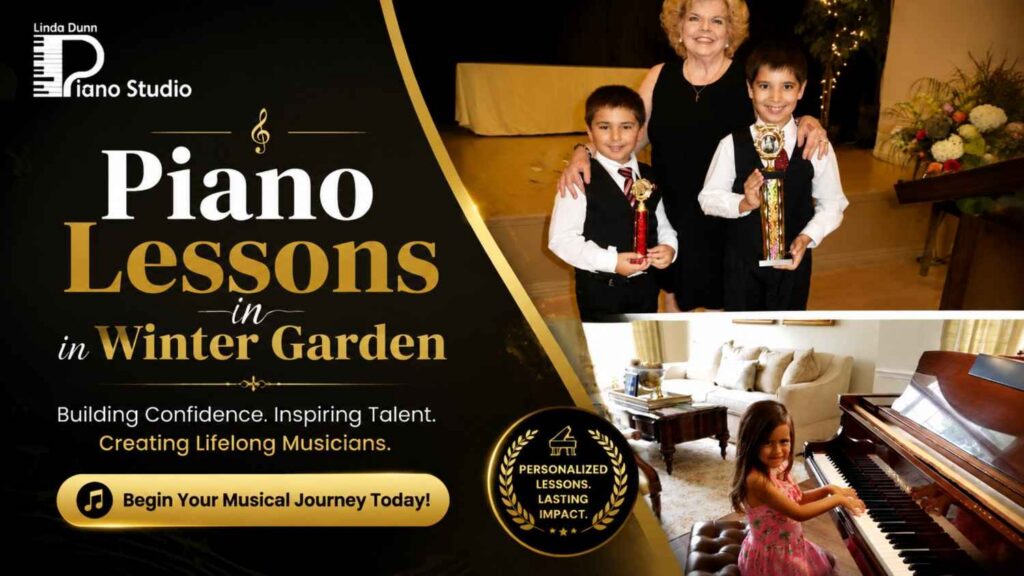
A first piano lesson should feel kinda welcoming, not totally overwhelming. At Linda Dunn Piano Studio, the very first lessons begin with the basics, correct posture, a simple hand shape, and a start into reading notes on the staff.
Since the teaching is one-on-one, the pace shifts to each student right away. A young kid might linger on rhythm games for extra weeks before moving into note reading. Meanwhile an adult beginner may move ahead more quickly through the fundamental stuff and get into small, simple songs sooner.
Typical elements of an early lesson include:
- Basic hand and finger positioning
- Introduction to treble and bass clef notes
- Simple rhythm exercises using clapping or counting
- A short, beginner-friendly song by the end of the session
This structure gives students something to feel proud of right away, which matters more for motivation than most people realize.
Benefits That Extend Beyond the Piano Bench
Learning piano has advantages that go way past just musical skill, like it can spill over into everyday life a bit. People who show up consistently usually end up with sharper focus and a sturdier memory as time moves on. When you read sheet music you’re also training pattern recognition , and that same kind of skill seems to transfer into math and reading comprehension too.
For little kids, piano lessons in Winter Garden often become the first real encounter with structured practice, and with the idea that reward comes later. Understanding that steady effort delivers tangible results, it teaches a kind of lesson that lasts well beyond music.
Adult students frequently mention a different benefit: piano becomes a genuine stress reliever. Sitting down at the keys after a long day offers a mental reset that few other hobbies provide quite as effectively.
How a Strong Foundation Shapes Long-Term Progress
Students who kick things off with proper technique generally move along more quickly later, when they hit the more advanced stuff. It’s kind of like the early lessons erase the guesswork before it turns into a habit. Instead of battling incorrect habits later on, students are able to grow new skills right on top of solid fundamentals, so it feels smoother, almost inevitable.
That groundwork also brings confidence. A student who gets the why behind a technique , not only the how, tends to adjust easier when they meet a fresh, new piece of music. This confident, more flexible kind of playing usually doesn’t happen by accident. It’s more the result of patient beginner instruction that’s well structured , and not just practice without a plan.
Consistency plays an equally important role. Weekly lessons paired with short daily practice sessions, even just fifteen minutes, produce noticeably faster progress than occasional practice without a set schedule.
Why Choose Linda Dunn Piano Studio
Picking the right instructor really kinda shapes how a student feels about music for, like, years and years, so this part deserves actual thought. Linda Dunn brings 47 years of teaching experience into every lesson, working with beginners, with returning adult students, and all the other kinds in between too, through all that time.
Here’s what makes this studio a strong choice for beginners:
- Decades of hands-on experience teaching students of every age and skill level
- Truly personalized lessons built around each student’s pace and goals
- Multiple styles taught, including Classical, Spiritual, Rhythm & Blues, and Basic Fundamental
- Flexible instrument options, since keyboards work well alongside traditional pianos
- A patient, welcoming teaching style that keeps young beginners and adult learners motivated
Families searching for piano lessons in Winter Garden gain real peace of mind from this level of experience. A teacher who has guided students through nearly five decades of lessons understands how to recognize struggles early and adjust before frustration sets in.
What New Students Can Expect in the First Few Months
Progress looks kind of different for every student, and personalized lessons reflect it, straight up. Most beginners usually spend their first few weeks on the bare fundamentals, like hand position, note reading, and basic rhythm patterns.
Then by the second or third month, a lot of students start mixing both hands together, and they play short complete songs. Confidence tends to climb pretty fast, once a student can make something recognizable happen, even if it’s only a simple melody.
Because lessons stay flexible, younger children and adult beginners often move through this timeline at different speeds, and that’s completely normal. Regular attendance and short daily practice remain the two biggest factors in how quickly a student advances.
Building a Musical Foundation That Lasts
Starting piano is a meaningful investment in a craft that lasts a lifetime, whether it’s a young child or an adult finally going after a long delayed goal. The routines formed in the first few months kind of steer everything that comes after, so getting off to the right start really does matter, a lot.
Consistency, patience, and solid guidance make the biggest difference during these early stages. Students who practice on a steady basis, and also get clear, personalized instruction , usually stay with piano much longer than those who muddle through self-teaching alone.
For families and adult learners who feel ready to begin, piano lessons in Winter Garden with Linda Dunn Piano Studio offer a welcoming environment for every age and every skill level, so you can step in without feeling judged or rushed. There’s never a wrong time to start building a musical foundation that really lasts, and you can take it slow or move quickly — either way, it feels right with Linda Dunn Piano Studio.